02 / Spatial reading
Read a deck plan as a lived space
Follow the route, not just the label
Map the movement between the places you expect to use. A listed facility may be less convenient if reaching it involves repeated lift changes, a long outdoor crossing or a route through a busy entertainment zone. Trace cabin-to-pool, dining-to-show and lift-to-quiet-space journeys. This is not about finding a perfect layout; it is a way to spot friction that could recur throughout a sailing.
Look for overlap at peak times
Pool decks, buffet approaches, theatre entrances and guest-service corridors can share the same routes. Consider arrival windows, weather changes and sea-day demand without assuming exact crowd patterns. Where current reporting is available, read more than one source and look for whether it describes how people move, wait or find seating rather than only listing venues.
Notice the relief valves
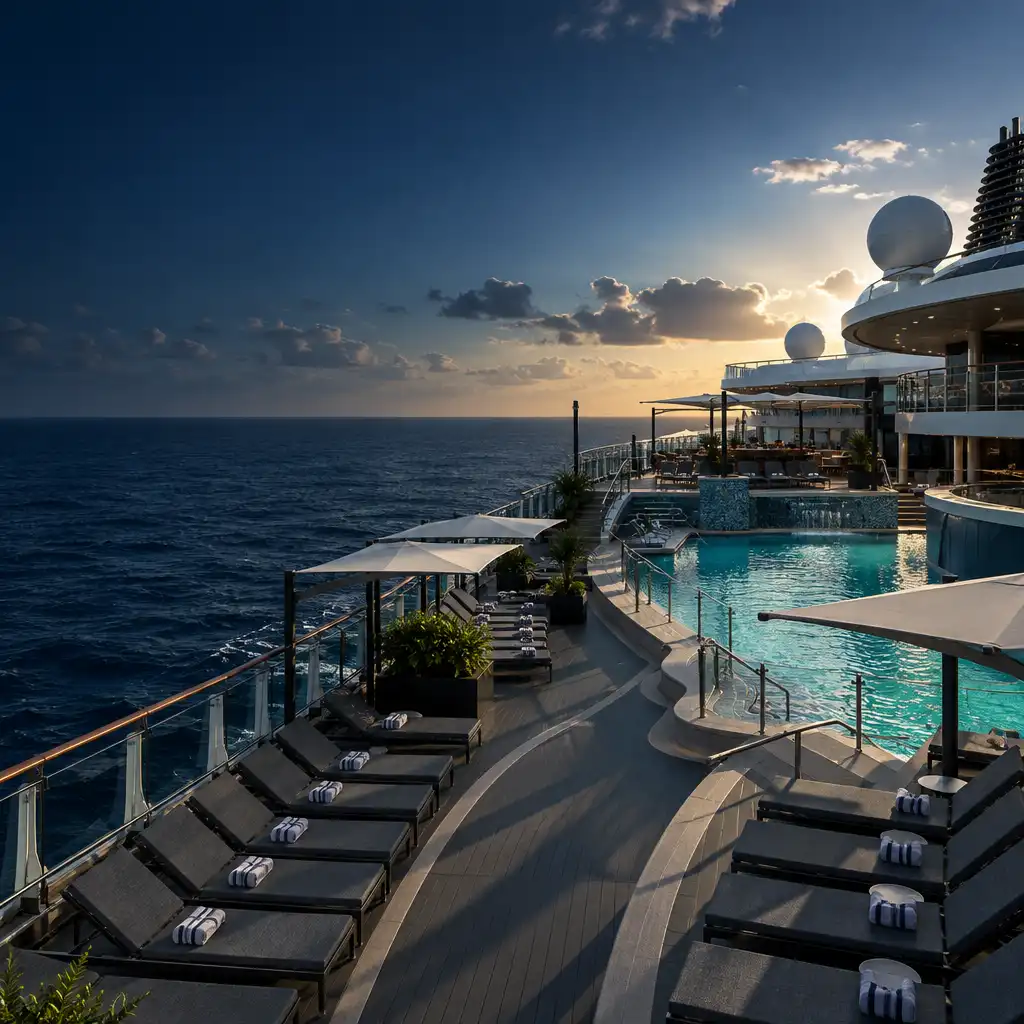
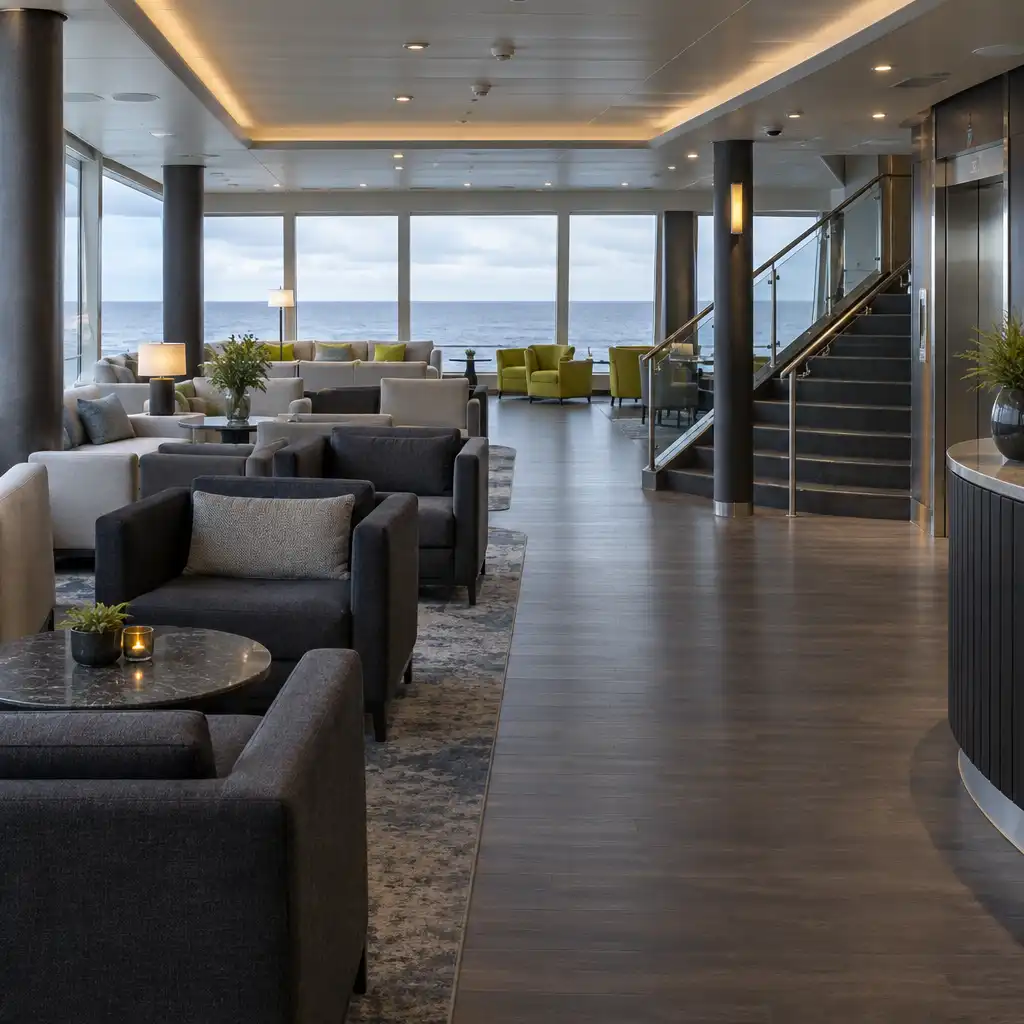
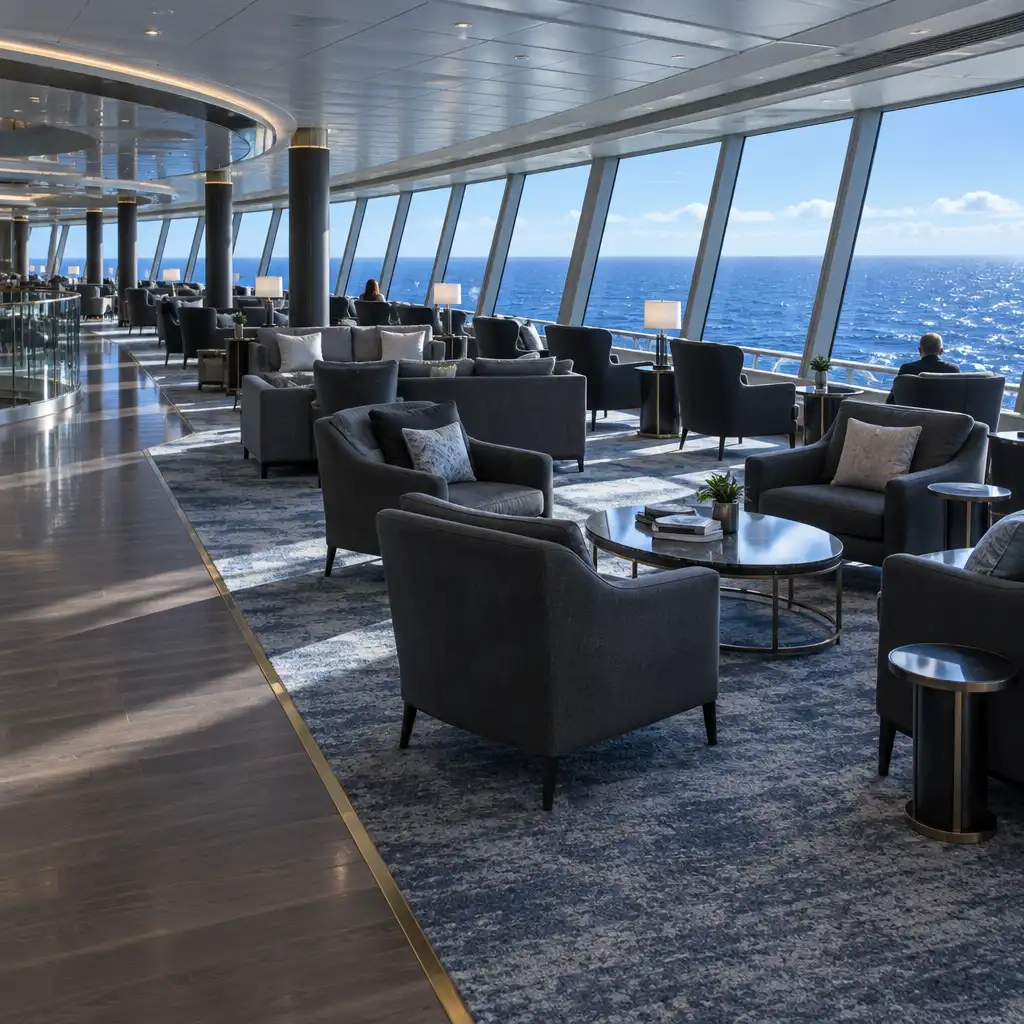
Alternate lounges, promenade routes, shaded seating and secondary food or drink spaces can provide choice when central areas are busy. Photos are useful for judging approximate scale, sightlines and seating density, not for declaring a ship superior. Research cue: compare broad views with eye-level descriptions before drawing a conclusion.